A Prompt Book as a Record of Decisions
A prompt book records staging choices, cue points, and open questions so a future team can understand what to repeat and what to rethink.
A prompt book works best when it records why a production made its choices, not just where actors stand. For a community theatre show, it can help a later team repeat a cue or understand a piece of staging without pretending that notes can preserve the live performance.
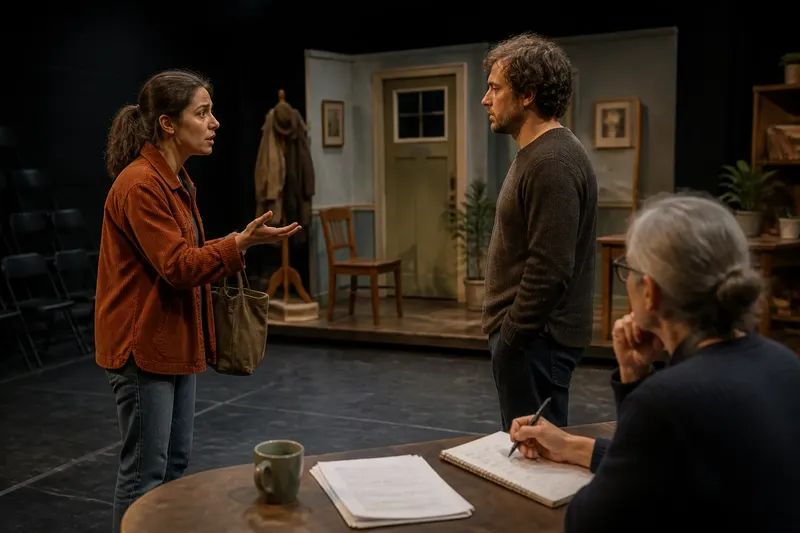
Imagine a community group preparing a small play in a room with a narrow entrance and a single table. The director wants the audience to notice a character’s decision without adding dialogue. The group settles on a pause, a chair turned away, and a light shift. Their prompt book records what they agreed, what remains flexible, and what another team will need to interpret anew.
Why does a production need a written record?
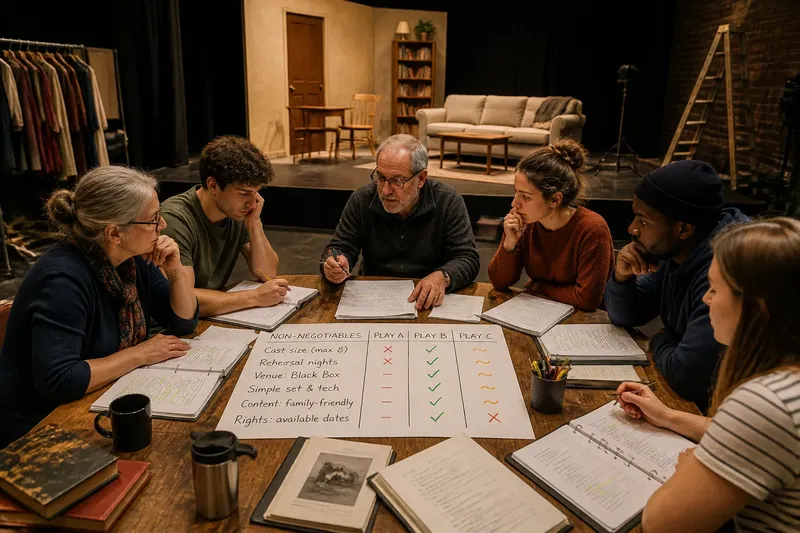
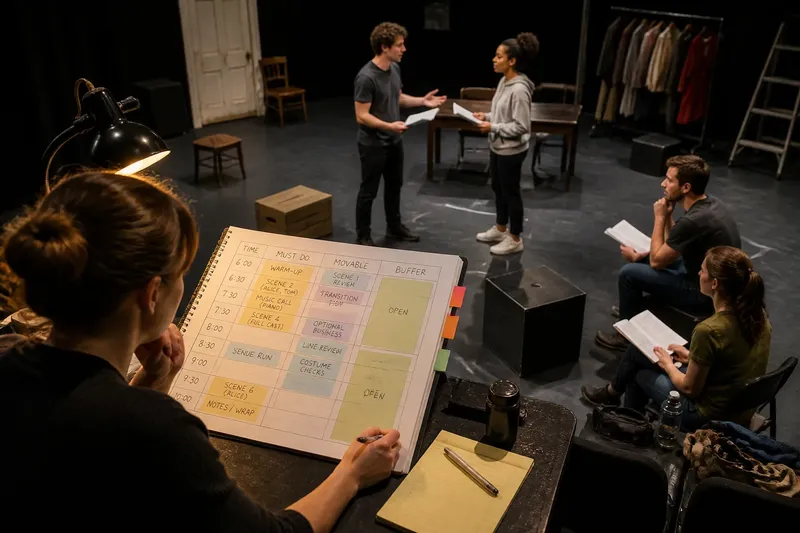
At first, the director’s notes are scattered across a script, a notebook, and messages to the stage manager. That can work while the same people are in the room. It becomes harder to rely on when a cue changes, a performer misses rehearsal, or the show moves to a different space.
The stage manager proposes one working prompt script. Its purpose is practical: make the current version of the performance legible to the people responsible for running it. It is not a transcript of every conversation. It records decisions that affect what happens onstage and backstage.
Prompt books are practical records made for particular productions, not universal accounts of how theatre has always been documented. A group can keep its own history without making broad claims about the record-keeping habits of other companies or eras. In this production, the useful question is simply: what does the next person need to know to understand the choices made here?
The group first marks a chair position as “downstage left.” After trying the scene in the actual room, they replace that phrase with a reference to the table and doorway. The revised note gives a new crew member landmarks they can recognize in that venue.
What belongs in a prompt book?
The group adopts a simple rule: include a note when it changes the performance, affects a cue, or helps someone reproduce the agreed version. Keep the script readable. A crowded margin can hide the instruction that matters during a show.
- Blocking: Check whether an entrance, exit, crossing, or position affects the scene. If it does, record it using room landmarks; if it does not, leave routine movement unmarked.
- Actor actions: Check whether a gesture or prop interaction shapes timing or the stage picture. If it does, note the action and its place in the sequence; otherwise, let the actor keep that choice flexible.
- Line and pause cues: Check what triggers movement or a technical change. If a specific line is the trigger, mark it; if timing is flexible, describe the sequence without prescribing an exact duration.
- Lighting and sound: Check whether an operator needs a cue point or recognizable effect. If so, record it using the company’s cue conventions; if the note depends on unfamiliar equipment, confirm it with the relevant operator before relying on it.
- Props and set changes: Check whether an item has a required preset, handoff, or transition order. If it does, record the sequence; if the action can happen in more than one workable way, avoid presenting one option as essential.
- Open decisions: Check whether a choice is still under discussion. If it is, label it unresolved; if the team has approved it, mark the current version clearly.
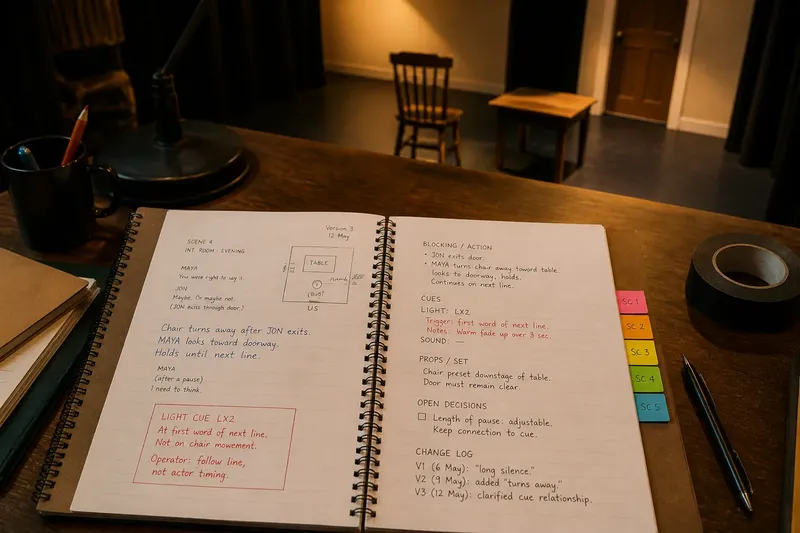
For the character’s pause, the stage manager notes that the actor turns the chair away after the other character leaves, then holds until the next line. The lighting cue follows that line, not the chair movement. The distinction helps the operator avoid firing early if the actor’s timing shifts slightly.
How should changes be recorded?
A prompt book becomes confusing when old and new choices sit beside each other without a clear status. The group asks the stage manager to keep one current copy. When a decision changes, the old note is crossed out legibly or dated in a change log, and the replacement is marked in the script. The aim is to make clear which instruction governs the next performance.
They separate fixed cues from adjustable performance notes. The light shift must follow the specified line. The pause may vary with the moment, provided the actor reaches the next cue in a way the operator can follow. This keeps the book useful without turning every human choice into a rigid command.
Say the director initially asks for a “long silence.” The starting note gives the actor and stage manager no clear sequence to follow. The group changes it to: after the other character exits, turn the chair toward the table, look toward the doorway, and continue when the next character begins the line. They leave the duration open. The resulting note preserves the relationship between actions while allowing the moment to breathe.
Use the script version and cue conventions agreed by the company. For technical instructions that depend on equipment, follow the manufacturer’s directions and the venue’s rules.
What can a prompt book not preserve?
A book can describe a movement, but not the actor’s private impulse behind it. It can mark a pause or sound cue, but it cannot ensure the audience responds the same way each night. Nor can it fully preserve how a cast listened to one another, how a room shaped projection, or how a performer adjusted to a partner’s timing.
That limit matters when a new cast inherits the production. A note such as “play the pause sadly” may flatten a moment into an instruction to manufacture an emotion. A more useful note identifies the playable action or cue relationship, then lets the actor make the choice in rehearsal. The prompt book records decisions; it does not replace bringing them to life.
It cannot settle artistic disagreements by itself, either. If the director and stage manager remember a choice differently, the written record can show what was entered as current. It cannot prove that the choice was best or that everyone understood it the same way. A clear conversation still matters when the record is ambiguous.
What should another team ask before using it?
Can a prompt book reproduce the original performance exactly?
No. It can support consistent cues and staging, but performers, rooms, and audiences change the texture of a live event. Treat it as a record to interpret, not a device for recreating an identical night.
Should every actor choice be written down?
No. Capture choices that affect timing, traffic, cues, or a significant stage picture. Leave room for discoveries that do not disrupt the agreed structure.
Who should maintain the prompt book?
Usually the stage manager, in communication with the director and relevant designers. One person should keep the working version current, while the creative team confirms changes that alter the production’s intent.
What if the venue changes?
Keep the original record, then adapt notes that depend on the old room’s landmarks, entrances, or equipment. Identify which choices are essential and which were solutions to the first venue.
How can a future team use the record?
In the invented production, the group reaches opening night with a prompt book that tells the stage manager when the light shift happens, tells the cast where the key movement belongs, and identifies the pause as flexible. When the show later moves to a different room, the notes give the next team a starting point rather than a demand to copy every detail.
For anyone searching for how to make a prompt book, the clearest approach is to record what another person needs to run or understand the agreed staging, mark uncertainty honestly, and leave living choices room to breathe. The book preserves decisions and their practical relationships, not the entire performance.
Before filing the script away, add a brief note about unresolved questions and the venue conditions that shaped the choices. It can help a future team distinguish a deliberate artistic decision from a solution that made sense only in the original room.